Prefabricated Infrastructure System: The Future of Smart Construction
The Prefabricated Infrastructure System (PIS) — where structural components are manufactured off-site and assembled on-site — is transforming how the world builds. From bridges and schools to housing and industrial facilities, prefabrication ensures speed, precision, quality, and sustainability.
Globally, countries like Singapore, Japan, and the UAE have adopted prefabrication to meet rapid urbanization demands.
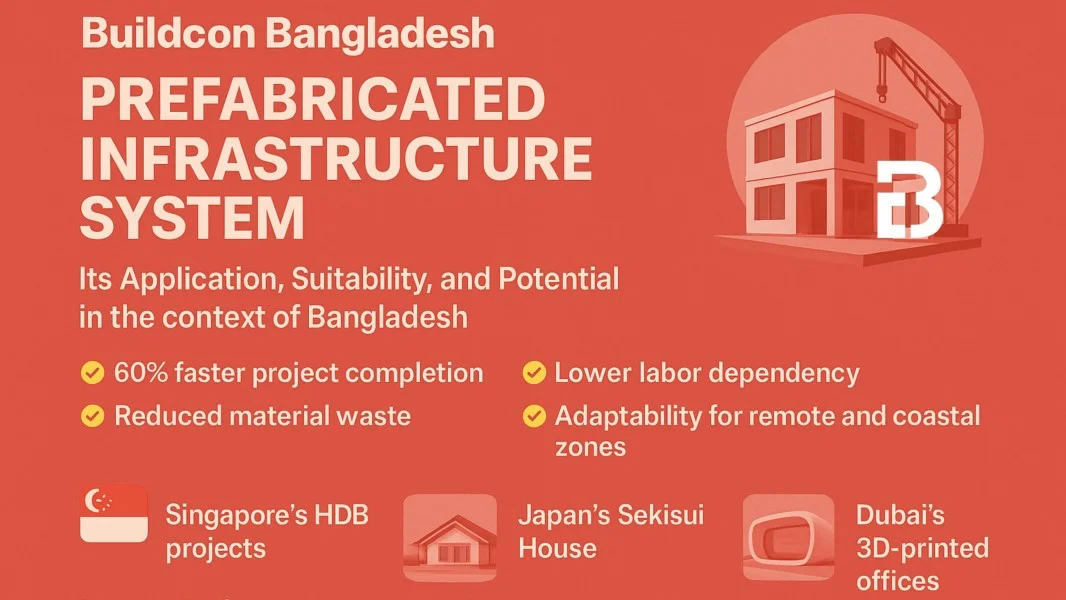
- Singapore’s HDB projects use modular precast systems to build thousands of high-quality apartments in record time.
- Japan’s Sekisui House produces prefabricated homes with high earthquake resilience.
- Dubai’s 3D-printed offices showcase how prefab and advanced technologies can merge for futuristic results.
In the Bangladesh context, the potential is immense — especially for affordable housing, industrial sheds, educational institutions, and disaster-resilient structures. With growing demand for time-efficient, cost-effective, and sustainable construction, prefabrication can redefine our infrastructure development model.
✅ Key Benefits:
- 60% faster project completion
- Reduced material waste
- Enhanced quality control
- Lower labor dependency
- Adaptability for remote and coastal zones
As Bangladesh strides toward Smart Infrastructure 2041, adopting prefabricated systems can accelerate national growth while supporting the vision of sustainable urbanization.
🔗 Let’s build faster, smarter, and greener — together.
© Buildcon Bangladesh